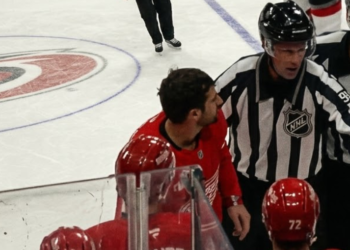
The Detroit Red Wings entered Tuesday night’s game with a significant flaw. However, some of the battles were deleted.
Dylan Larkin and several of Detroit’s younger players had an immediate impact on Tuesday night’s victory. However, there was a substantial improvement in special teams on both sides of the ice.
After the first two games of the season, the Red Wings had terrible special teams stats going into Tuesday’s encounter. Its power play had a modest 14.2% conversion rate, going 1-for-7. The penalty kill was 4-for-8, which meant the Wings only killed 50% of the opposing power plays.
If Detroit wanted to avoid playing from behind, the assignment was clear: Figure out how to stop an opponent while playing with a disadvantage. And when there’s a chance, start netting more often.
Before Drake Batherson broke through and scored at 6:08, the Wings had already dispatched the first two penalties they had been subjected to. But for Ottawa, who had five chances on the man advantage tonight, that was as good as it got.
The Red Wings’ Power Play Discovered Its Rhythm Many Times
Nikolas Matinpalo was penalized for holding at the 0:48 mark of the second period, giving the Wings an opportunity to ease their power-play difficulties. Dylan Larkin was almost on target for his second goal of the evening when he was fed by Lucas Raymond.
But Viktor Arvidsson took control of the puck and scored after Samuel Ersson, the goaltender for the Senators, deflected it with a pad save. This was Arvidsson’s second goal and second power-play goal of the season.
The Red Wings’ synchronicity on that last sequence was what made this play so effective. Behind Ottawa’s defense, Larkin snuck and stood alone in front of Ersson. There was no hesitation on his next shot, and it caused an Ottawa player to block Ersson by accident. This enabled Arvidsson, who was open, to complete the sequence.